
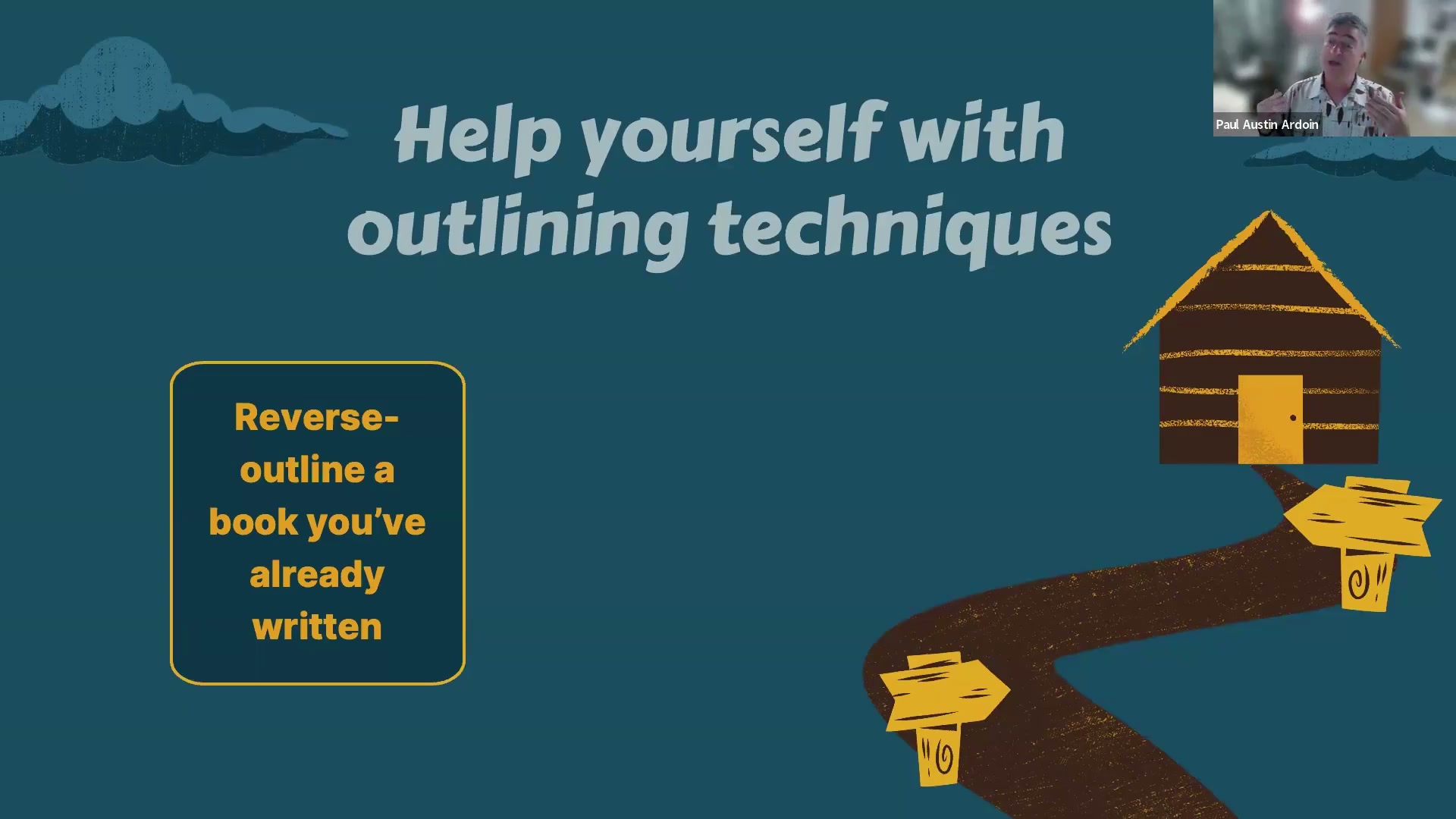
A completed novel can show a discovery writer how they already build a story. In Outlining for Novelists Who Don’t Outline, mystery author Paul Austin Ardoin suggests making a short outline of a book you have finished, then using it to examine a structural problem in your current work. Karen Guyler hosts the Indie Author Training webinar.
Paul describes himself as a discovery writer: he often learns about his characters and plot while writing. His approach leaves room for that process. A reverse outline records the story that exists, so the author can see how its parts relate to one another.
Start with a book you know works
Choose a completed novel of your own that you consider successful as a story. Read through it and summarize the main movement of each chapter. In the webinar’s questions, Paul suggests trying a paragraph per chapter and adjusting the level of detail to what helps you. He does not prescribe a page of analysis for every chapter.
A useful summary makes the change in the chapter visible. For instance, an illustrative mystery summary might say that the sleuth learns a suspect could not have been at the scene, then chooses a different lead. That tells you more about the story’s movement than recording only that the characters meet in a café.
The summary can remain plain. You are building a reference for your own reading of the book, so polished synopsis prose is unnecessary. Stop adding detail when you can recognize what the chapter contributes.
Compare the passage that is giving you trouble
Now return to the current manuscript and name the problem you are investigating. Perhaps the middle feels drawn out, or an important change arrives before the reader has enough context to understand it. Paul’s example concerns the placement of a major low point and the effect its timing has on the surrounding story.
Compare that stretch with the completed book. Look at what has happened by a comparable point and what still needs to happen afterward. The earlier novel gives you something concrete to examine. It does not establish a compulsory chapter number for every future book.
You may discover that the current draft spends several chapters repeating a decision that the earlier book moved through quickly. You may also decide that the longer treatment is appropriate because this story asks something different of its characters. The comparison helps you identify the choice you are making.
Use only as much structure as the problem needs
Paul returns throughout the session to the value of adapting an outlining technique to the writer. An author can use a broad structural reference or outline a limited section, then continue discovering the story through drafting. A complete advance outline is another option, with its own need for revision.
For this exercise, keep your notes beside the current manuscript and choose one change to investigate. Read the affected section after making it, including the lead-in and what follows. Keep the earlier version available so you can compare the result without losing material you may want to restore.
The webinar’s session page describes Paul’s approach and provides the available access options. His full discussion also considers collaboration and the ways different structural models can help with particular writing problems.